Nest boxes effectively replace vanishing natural hollows and genuinely increase survival rates. Sikora, blackbird, starlings and other bird species in cities and gardens.
Success depends on three elements: proper construction of the nesting box (board thickness, entrance hole diameter, roof design), the right location, and the correct time for installation.
Nest boxes should ideally be hung in autumn or winter (before March) so that birds have time to accept them before breeding season.
Annual cleaning of nesting boxes after the end of the nesting season (November-February) limits parasites and is required by nature conservation regulations.
Installing birdhouses allows birds to settle in areas where they would otherwise be unable to survive due to a lack of natural shelters.
Key Information (Summary)
Nest boxes are not just garden ornaments – they are a real tool for nature conservation. Below you will find the key points that I will develop further in the article:
Nest boxes are specially prepared structures that serve as nesting places for birds and other animals, such as bats or hornets, in human-modified environments.
The effectiveness of the nest box depends on the dimensions of its base, the diameter of the entrance hole, and the design of its roof – every element is important.
Bird nesting boxes are best installed in autumn, allowing birds to get accustomed to the new object before the breeding season.
Regular cleaning (November-February) reduces the risk of parasites and increases the chances of resettlement in the following year.
Nest boxes contribute to species conservation and promote biodiversity, and their appropriate quantity and proportions can restore bio-equilibrium in ecosystems.
Introduction – why do birds need nesting boxes?
Many bird species are losing their natural nesting sites due to the felling of old trees. Data from the Central Statistical Office (GUS) indicate that between 2010 and 2020, approximately 40% old trees were removed from commercial forests. Added to this are the thermal refurbishments of buildings carried out since 2015, which have eliminated thousands of gaps under roofs – natural shelters for swifts, sparrows and bats.
A nesting box is an artificial nesting site for cavity-nesting bird species. The great tit, blue tit, starling, and house sparrow – all these species require enclosed spaces for raising their young. In environments lacking natural tree hollows, nesting boxes become their only chance to reproduce.
Nest boxes can be used by various bird species that naturally nest in tree cavities, and their presence in the environment can support local ecosystems. Birds inhabiting nest boxes feed on large quantities of insects, which reduces the need for chemicals in the garden.
Benefits of installing nesting boxes:
Protection of individual bird species threatened by habitat loss
Supporting biodiversity near home
Natural pest control without pesticides
Environmental education for children and adults
In the following sections, I will discuss the types of nest boxes (closed, semi-open, specialised for swifts and bats), materials, and practical aspects of installation.
Types of nesting boxes and selection for bird species
Different bird species require different sizes of nesting boxes and entrance holes. The classification developed by Jan Sokołowski in the 1950s still forms the basis for modern recommendations.
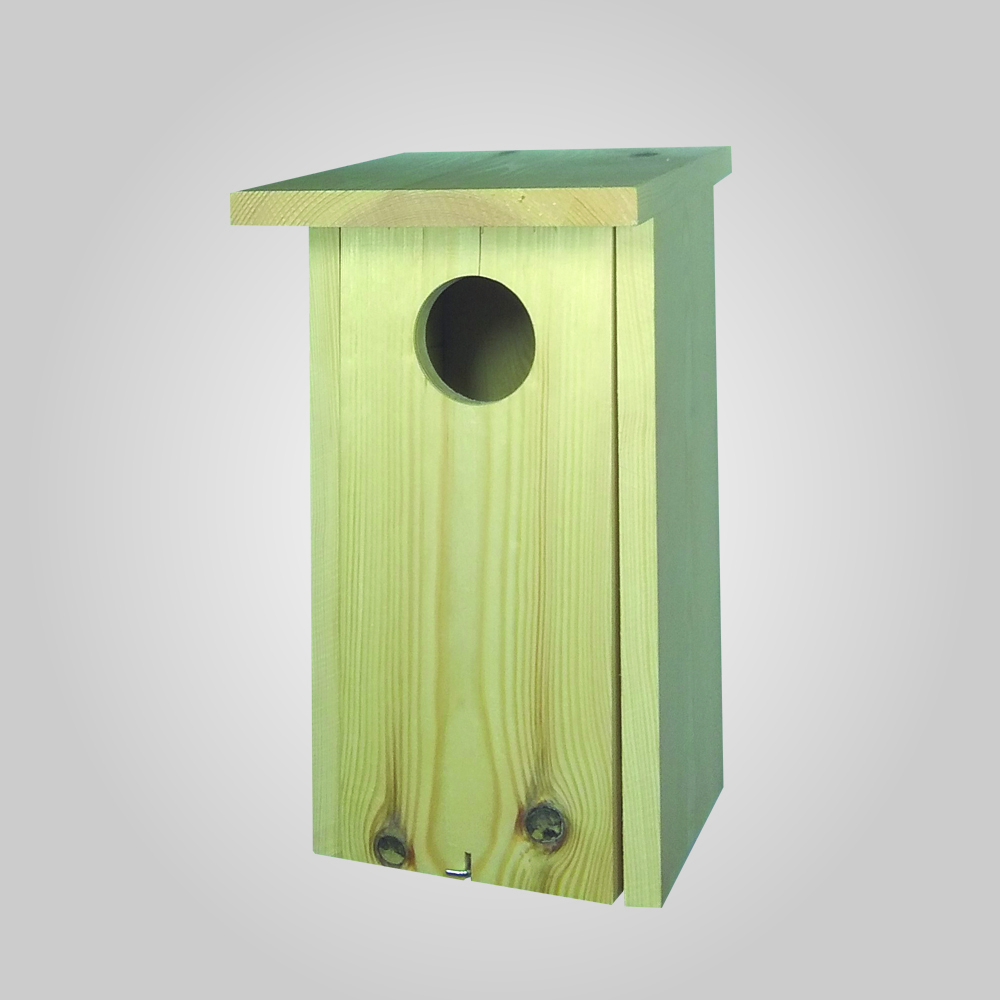
Cabins with a round opening:
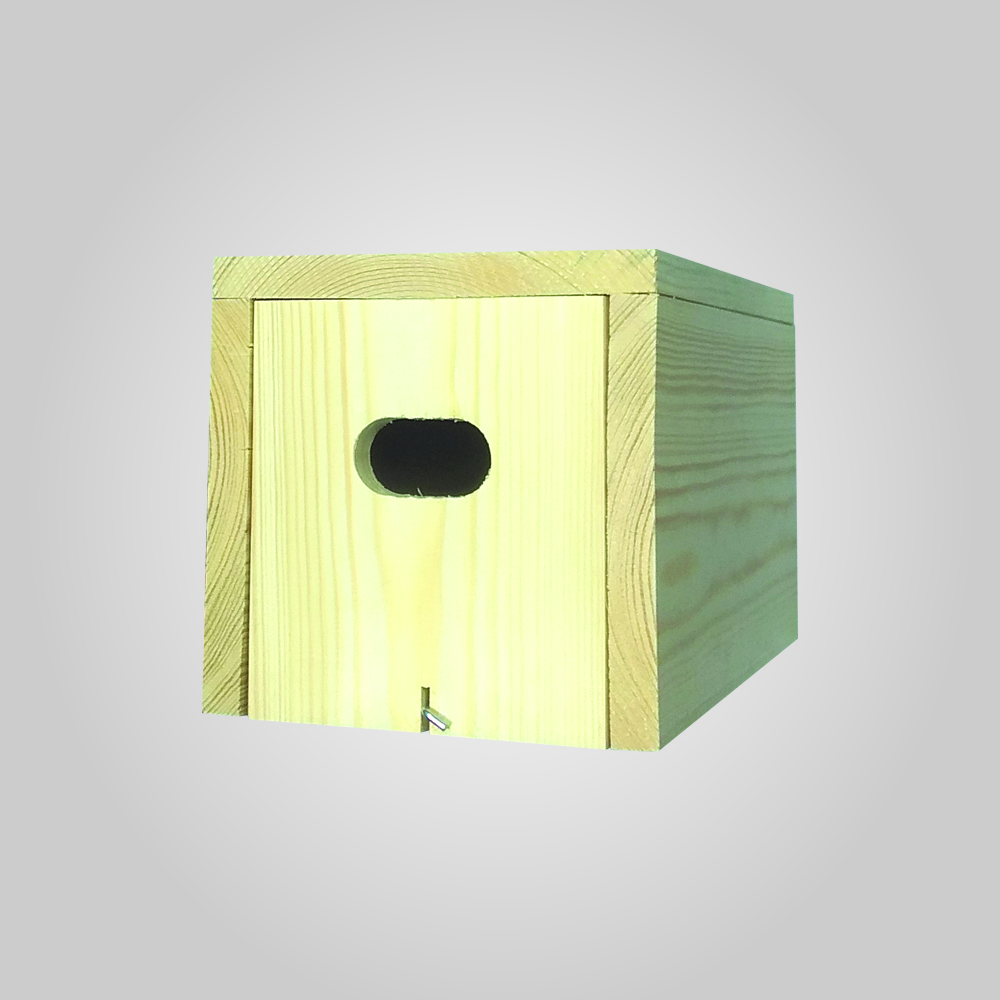
Type A (33 mm opening) is the most popular nest box for the great tit, house sparrow, and tree sparrow.
Type A1 (28 mm opening) – Crested Tit, Willow Tit, Coal Tit
Type B (47 mm opening) is designed for starlings and nuthatches
Type D/E (hole 50+ mm) – Jackdaw, Hoopoe, Kestrels, Owls
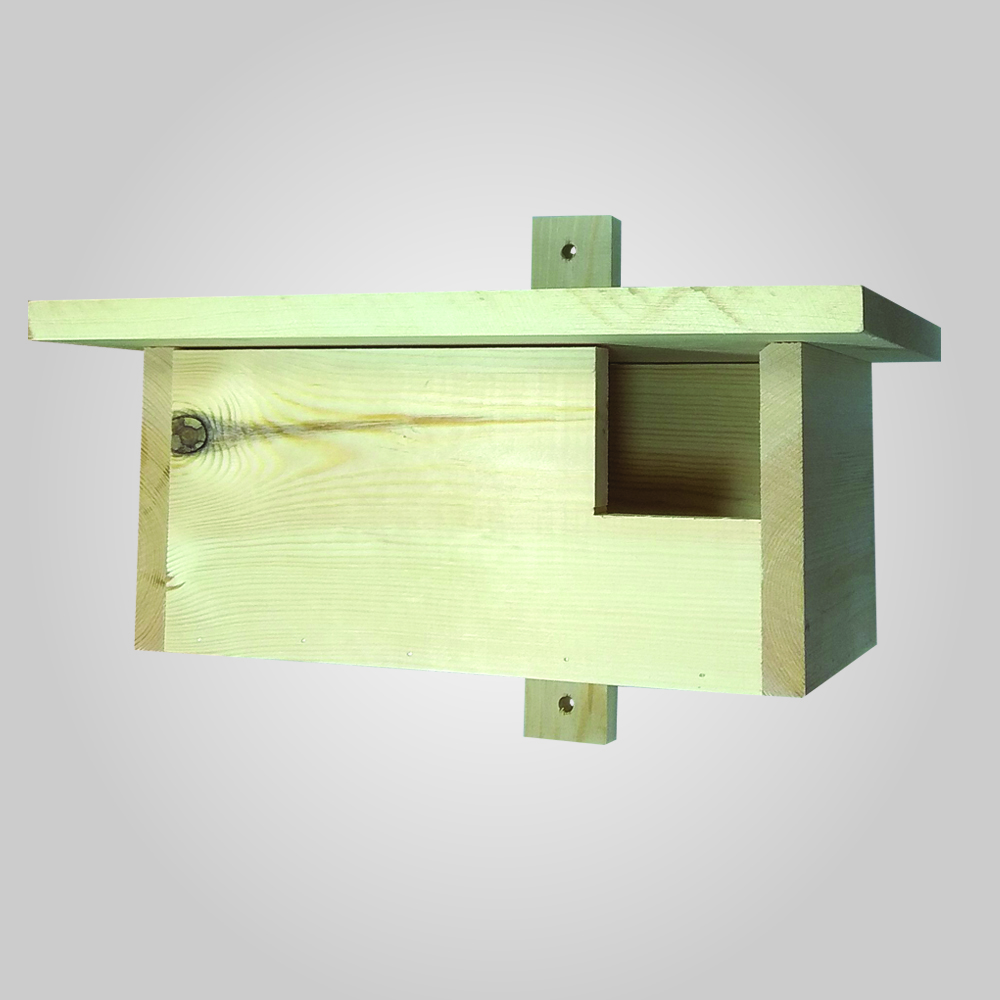
Semi-open booths
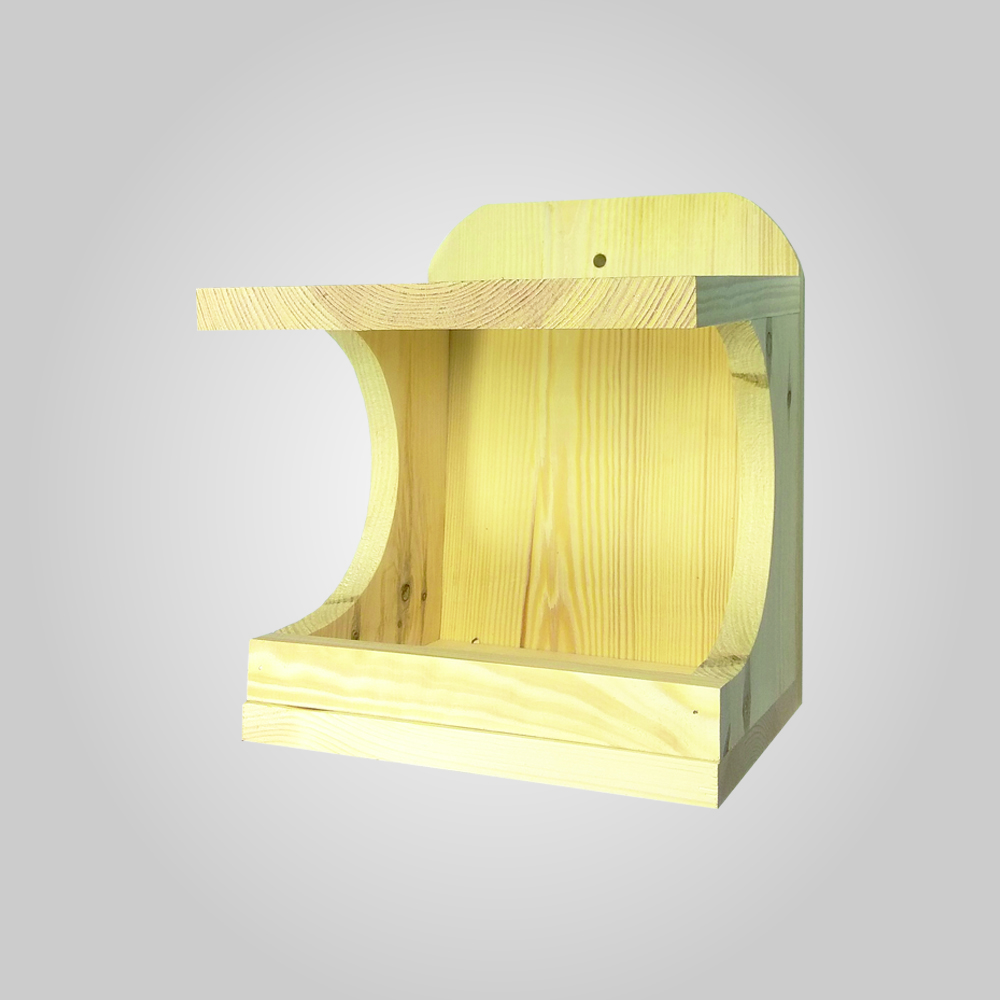
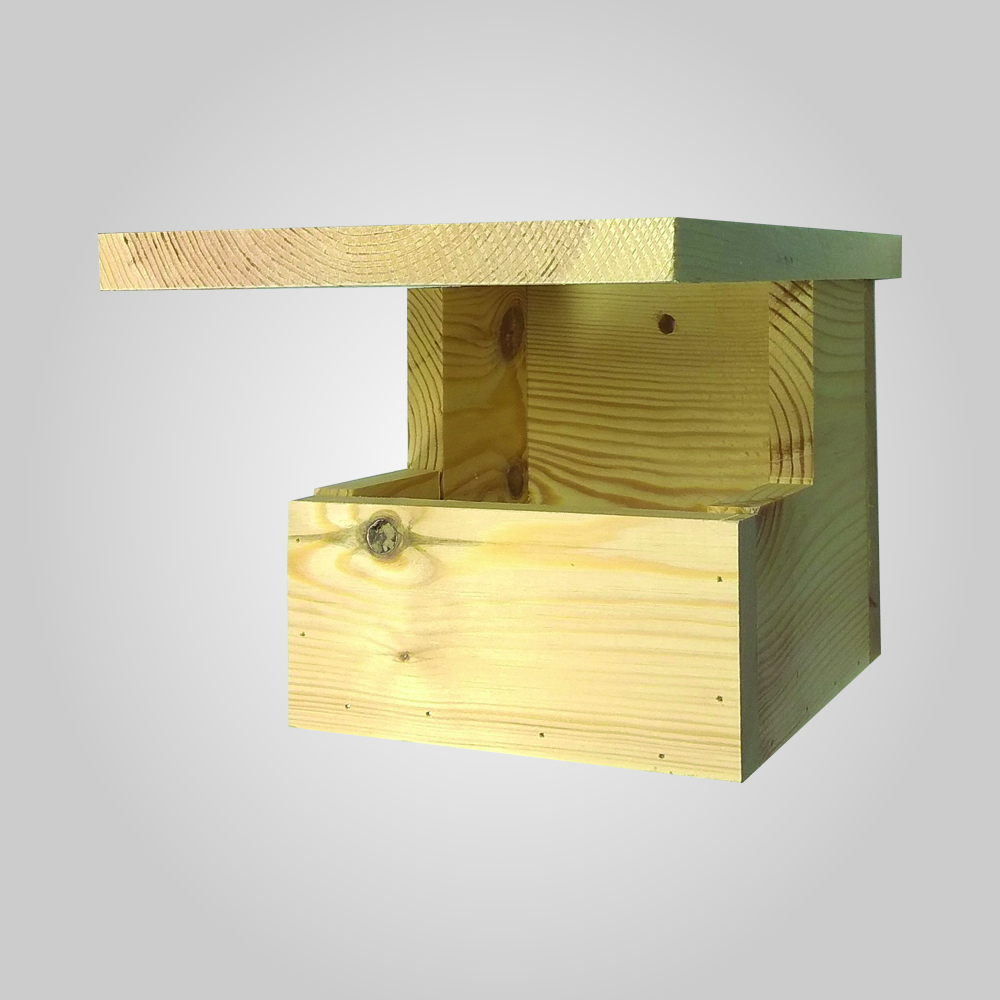
Nesting boxes for wagtails and grey flycatchers should be semi-open to provide adequate hatching space.
Also used for blackbirds, robins and wrens
They require a quiet, sheltered spot in the undergrowth
Specialist cabins
Sparrows prefer nest boxes designed as apartment blocks, as they are sociable and like to nest in groups.
Swifts boxes mounted under the eaves of buildings (6-10 m height)
Bat boxes and tussocks
For a beginner bird enthusiast, an A-type box (for tits) or a B-type box (for starlings) would be best. The type of box and the diameter of the opening determine which species will be able to use it.
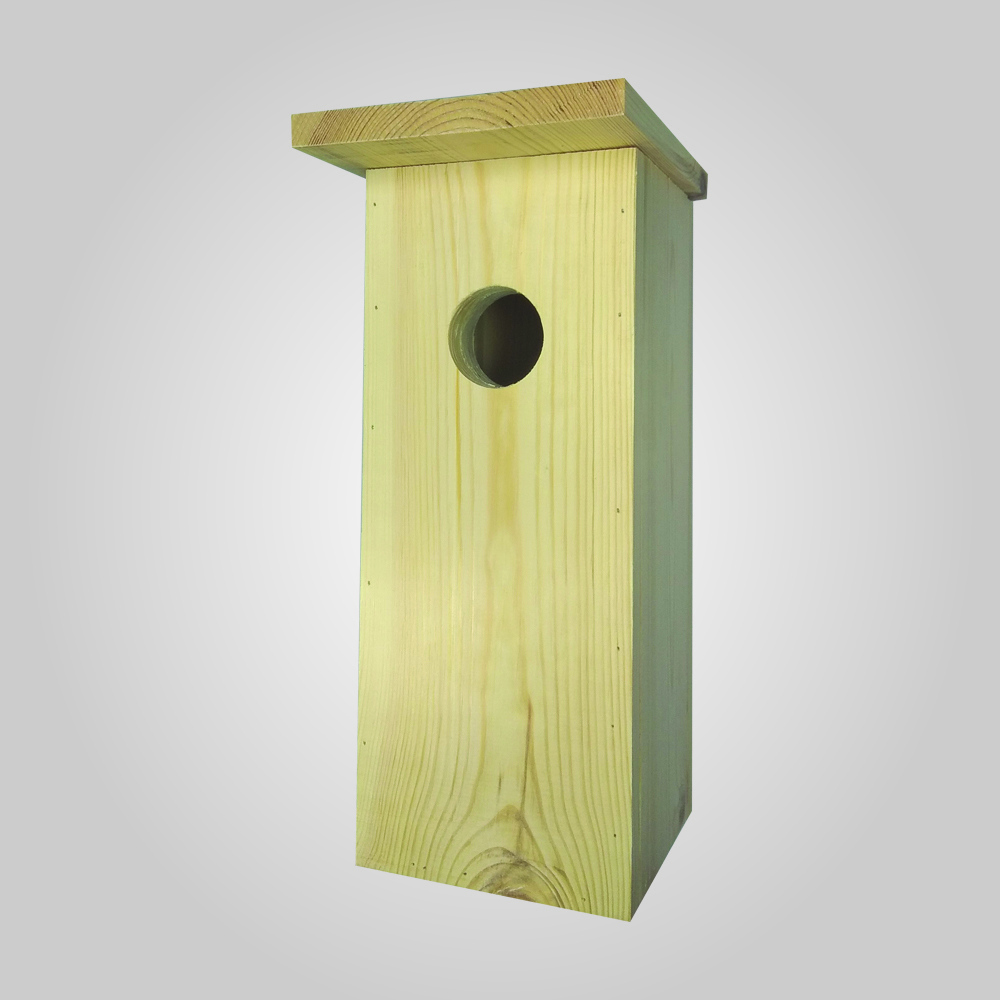
Woodpecker nesting boxNesting box for swiftsNesting box for the hoopoeNesting box for the blackbirdRedwing nest boxFlycatcher nesting box
Nest box construction materials and foundations
The material for the nesting box should be solid wood at least 2 cm thick. Pine, spruce, larch, oak or acacia are best. The walls of the nesting box should be made of unplaned boards about 2–3 cm thick, as plywood and particleboard are not suitable for building nesting boxes because they soak up water and disintegrate.
A nest box should be made of wood and not painted inside. A rough interior surface helps the chicks climb to the entrance hole. The outer walls can be lightly sanded for aesthetics.
Structural elements
Floor dimensions adapted to the species (example dimensions: 12×12 cm for tits)
The roof of the kennel should project at least 3-4 cm beyond the front wall with the opening.
Front panel with high-set inlet opening
Rear panel with mounting strip for fixing to tree trunks or walls
The nest box should have an opening side or roof, which allows for cleaning after the breeding season. This can be achieved using a hinge, a rotating nail, or easily removable screws.
Inlet opening – why do a few millimetres make a difference?
The entrance hole in the nesting box should be placed as far as possible from the bottom of the box to prevent predators from accessing the brood, and its diameter should be adapted to the species of bird that will inhabit the box.
Recommended hole diameters:
26-28 mm - blue tit, great tit, coal tit
32-34 mm – great tit, house sparrow, tree sparrow
45 mm and more – starling, jackdaw, larger species
Nest boxes for tits, such as blue tits and great tits, should have an entrance hole diameter of between 26 mm and 32 mm, and their height should be approximately 28 cm.
The position of the hole matters for predator protection. The recommended distance from the bottom of the box is 18-22 cm. This prevents martens and cats from reaching the eggs or chicks with their paws through the entrance hole.
Do not mount a perch near the entrance hole. Birds do not need it, and it makes it easier for martens, cats and magpies to attack.
How to protect a nesting box from the weather and predators
The nesting box should be slightly tilted forward, with the roof pitch directed towards the front wall to shield the entrance hole from rain. The roof must be watertight, but not hermetic – small ventilation gaps under the roof ensure airflow.
For external impregnation, use natural agents, e.g. linseed oil. Avoid paints with solvents and varnishes – the fumes can kill chicks. Never impregnate the interior chemically.
Protection against predators:
Metal collars fitted to tree trunks make it harder for martens to climb (reduces attacks by 90%)
Tin collars around the entrance hole protect against enlargement of the hole by woodpeckers
Wire mesh over semi-open birdhouses when magpies are particularly active
Secure mounting is essential. The birdhouse shouldn't sway in the wind or twist. Use screws, clamps, or anti-rotation ropes depending on the mounting location.
When and where should I hang a nesting box?
The entrance hole of the nest box should face east or southeast to protect the interior from rain and sun. Avoid full southern sun exposure – the interior may overheat in summer.
Nest boxes should be hung at a height of 2-3 metres to ensure the birds' safety from predators. In parks and forests, they can be mounted higher (3-5 m), and boxes for swifts and starlings on buildings – even 6-10 m above the ground.
The best time to hang nest boxes is in autumn, which allows birds to get used to the new object before the breeding season. Nest boxes are also used by birds in autumn and winter as shelter from the cold – this is an additional argument for early installation.
Nest boxes should be prepared before the breeding season, by March 15th at the latest for small songbirds, to allow the birds to get used to them. A nest box can be hung up all year round, but installing it just before egg-laying is less effective.
Key localisation principles:
Windbreak and sunshade
An opening facing east or southeast
Distance from the ground: 2-3 m in the garden, higher on buildings
Avoiding places with heavy footfall
Nesting boxes in your own garden – practical tips
In your own garden, you can create a real sanctuary for birds. Nesting boxes should be hung at appropriate intervals; for example, for tits, a distance of 30-50 m is recommended, and for owls, 200-300 m, to avoid overcrowding.
Territorial species require around 30 metres of space between nest boxes. If you are installing different types of boxes (e.g. for tits and starlings), they can hang closer together without conflict.
Practical gardening tips:
Connect birdhouses with winter feeders and drinkers – birds will accept the area more quickly
Limit the use of pesticides within 50m of nesting boxes.
Keep the hole opening accessible to birds – no dense branches near the entrance.
Patience: even if the cottage remains empty in the first year, wait 2-3 seasons
Cleaning and maintenance of nesting boxes after the breeding season
Nesting boxes should be cleaned once a year – ideally between mid-October and the end of February, when the breeding season is over. This is a legal requirement arising from the Nature Conservation Act.
How to clean a kennel:
Open the sliding panel or remove the roof
Remove old sockets and material remnants
Scrape off any dirt with a wooden spatula
If there are any parasites, pour boiling water inside.
Leave it open to dry
Regular cleaning limits the development of fleas, mites, and lice. It also reduces the risk of hornets or wasps occupying the nest in the following season.
Whilst you’re at it, carry out a technical inspection: check the fixings, the roof’s watertightness and the condition of the waterproofing. Reapply the outer layer of oil every 2–3 years.
Common mistakes when putting up nesting boxes
Even with the best intentions, mistakes can be made that will put off birds or threaten their health.
Construction errors:
Desks that are too thin (below 2 cm) - poor thermal insulation
Leaky roof – dampness destroys nests
Lacquered or chemically impregnated interiors – toxins are killing chicks
Lokalisation errors:
Full sun all day – overheating
Strong draught - tits abandon brood
Too low to the ground – access for cats and martens
Organisational errors
Too dense a placement of birdhouses of the same type leads to territorial aggression
Failure to carry out annual cleaning reduces breeding success by 50%
Attaching of the stick at the opening – an invitation to predators
FAQ – Frequently asked questions about nesting boxes in 2026
In 2026, is any permission needed to hang a birdhouse on your own home?
In typical cases – a detached house, a garden – hanging a nest box does not require permission. However, interference with the walls of apartment blocks or historic buildings may require the consent of the housing association or the conservation officer for historic buildings. Penalties for arbitrary interference can range from PLN 1,000 to PLN 5,000.
Can nesting material, such as sawdust or fur, be placed in a nesting box?
Most bird species build their own nests and do not require pre-filled nesting boxes; they are left empty. A thin layer of sawdust is only sometimes used for boxes made from solid logs. Do not use synthetic cotton wool or fraying materials, which can wrap around the chicks' legs and cause injury.
Do nest boxes in the city really help birds when there's little greenery around?
Yes. Even solitary trees, shrubs, and lawns create a „habitat mosaic” in cities, and birds can make use of scattered food sources over a large area. Bird nesting boxes in urban areas are particularly important after the insulation of blocks of flats, which has removed many natural crevices and nesting sites.
What to do if a nest box remains empty for several years?
Check basic parameters: suspension height, hole direction, proximity to trees or shrubs. Change the location by a few metres, adjust the height, or replace it with a different type of nest box better suited to the local avifauna. Remember that a European pied flycatcher or a Eurasian nuthatch may have different preferences than tits.
Can a nesting box with eggs or chicks already in it be moved?
Moving a nesting box during the breeding season is generally inadvisable and may violate nature conservation regulations. Birds often abandon their nests after interference. Relocate them solely outside the breeding season. In emergency situations (e.g., urgent repairs), consult your local nature conservation unit or the Regional Directorate for Environmental Protection.
A nesting box is a simple investment that yields tangible benefits for nature for many years. If you're planning to install one in 2026 – act now, before March. Even one well-made box can become a home for future generations of tits, sparrows, or starlings. Check which species live in your area, choose the right type of box, and give the birds a chance for a safe nesting.


 English
  Polish
  Russian